
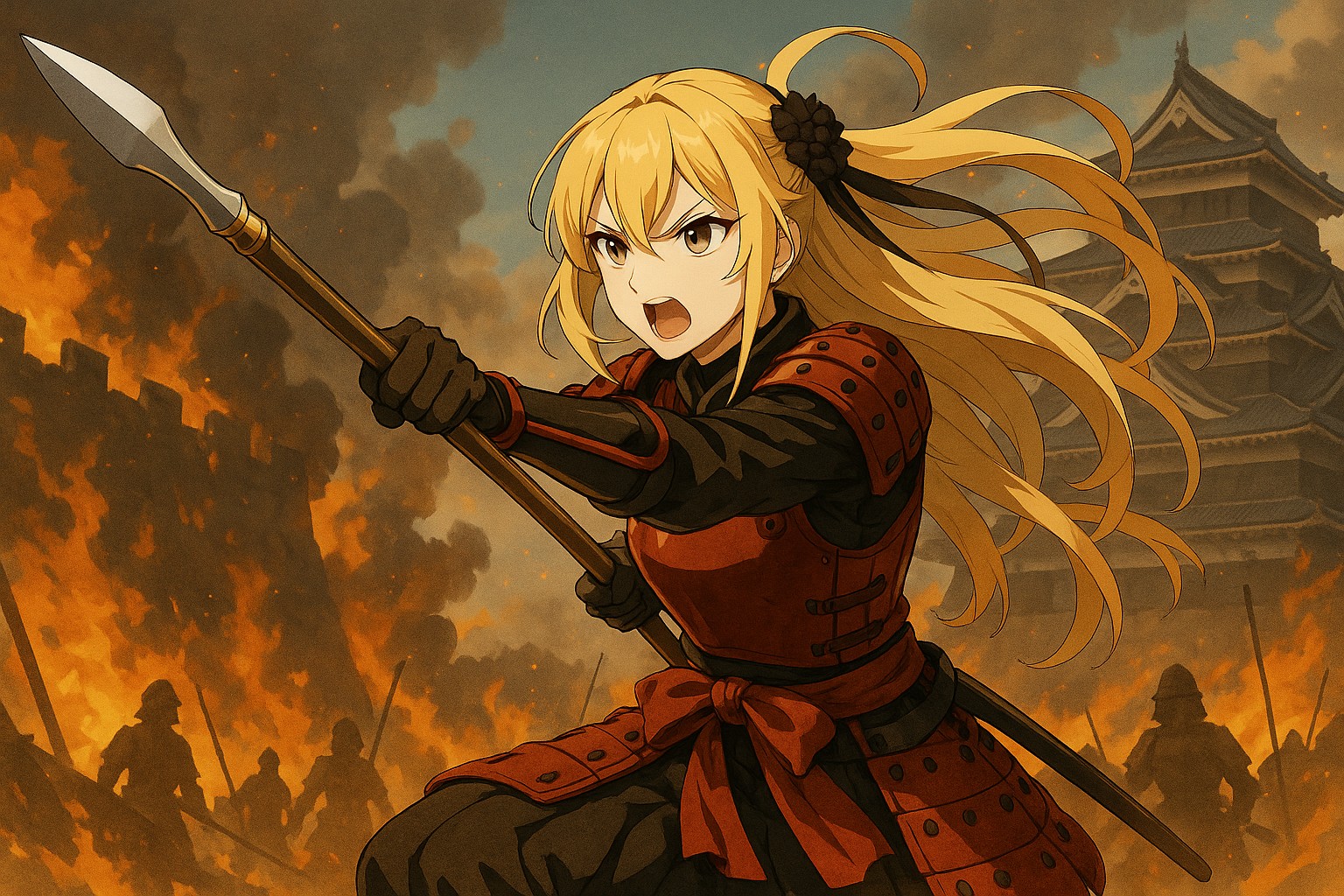
The inspiration for this song came to me while watching a historical drama.
I have always loved period dramas, for within them lies the essence of humanity itself.
Loyalty and great ambitions, battles that could not be avoided, the bonds and betrayals born in their midst—
all of these are concentrated fragments of what it means to be human.
Among such stories, what fascinates me most is the late Edo period leading to the Satsuma Rebellion.
Rarely has Japan undergone such rapid and dramatic change.
Of course, I did not live through that turmoil.
And perhaps the transformations we face in our own age will, from the perspective of the future, be seen as equally drastic.
Still, the passage from Edo to Meiji remains one of the most dramatic eras in our history.
With Voices of the Fallen, I wanted to capture that background and merge it with the power of metal.
The result is not only courage, but also the deep emptiness that lingers after battle.
When people throw themselves forward—or when they cannot—those moments carve scars, sometimes even trauma, into the soul.
War is something the world would be better without, yet it is difficult to escape.
As animals we carry instincts—territory, survival, the wildness within.
And so I cannot help but wonder: how does God intend for our reason to evolve, and where are we being led?
That question fills me with awe.
The voices of the fallen are not bound to the past alone.
Across the distance of time, their cries resonate with us who live today.
Loyalty, ambition, love and loss—though their shapes may change, the essence remains.
When we listen closely, we find the same trembling within ourselves.
Voices of the Fallen is not only a song of remembrance.
It is the joining of past and present, voices echoing together.
It is a resonance that does not end with mourning,
but carries forward into the future—an eternal chorus that refuses to be silenced.
As its creator, I simply hope this song carries those voices forward.